A different shift pattern can change more than the number of workdays. It can alter fares, parking windows, pass value and the availability of the return route. A commuter should revise those assumptions separately from changes in pay. More hours worked do not automatically imply a particular transport cost or amount available to spend.
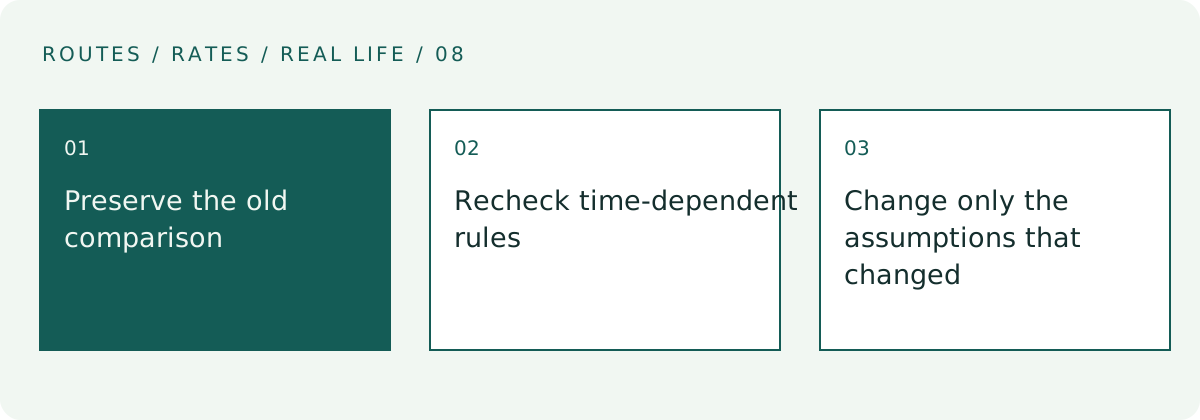
Preserve the old comparison
Keep the previous route and assumptions long enough to explain what changed. Then build the new pattern using the same units. Do not overwrite the old number and lose the reason for the difference. This is a planning comparison, not a payroll calculation.
Imagine a fictional change from five short workdays to four longer days. At $6 per complete commute, the simple fare component falls from $30 to $24. But if one longer day ends after ordinary service and requires a $15 replacement return instead of a $3 return, the revised total becomes $36. The extra condition reverses the apparent saving.
Recheck time-dependent rules
A parking discount may require an earlier arrival. A transit pass may cover some but not all services. A carpool may no longer fit the departure time. These are separate questions, and each should be confirmed with the relevant operator or participant.
Do not assume the employer will reimburse a new expense. Ask about the actual policy if it is relevant. Similarly, do not treat a shorter commute budget as a change in wage entitlement or taxes. This site compares planning inputs, not legal or employment outcomes.
Change only the assumptions that changed
Keep stable fares and distances in place unless evidence says otherwise. Update the workday count, the applicable time window and any newly required segment. This makes the model easier to audit and avoids starting from an unrelated monthly average.
End with a short before-and-after explanation: one fewer trip, a different return route, a revised parking condition, or another specific change. The practical value is understanding why the total moved. No account credentials, card numbers or private employer records are needed to carry out that arithmetic.
Continue the comparison
Count journeys before multiplying the fare
Fuel cost is one layer of driving cost
Method and scope
This is an original worked planning guide. All amounts, schedules and providers in its examples are fictional unless a source is explicitly identified. The calculations explain relationships, not a personalized financial recommendation. No private account or provider payment flow was tested.