A commute budget begins with the journeys you expect to make, not an average month copied from somewhere else. For a worker using Fintwist, the card balance and the cost of reaching work are separate questions. This guide builds a fictional route calendar; it does not check an account, predict pay or recommend a financial product.
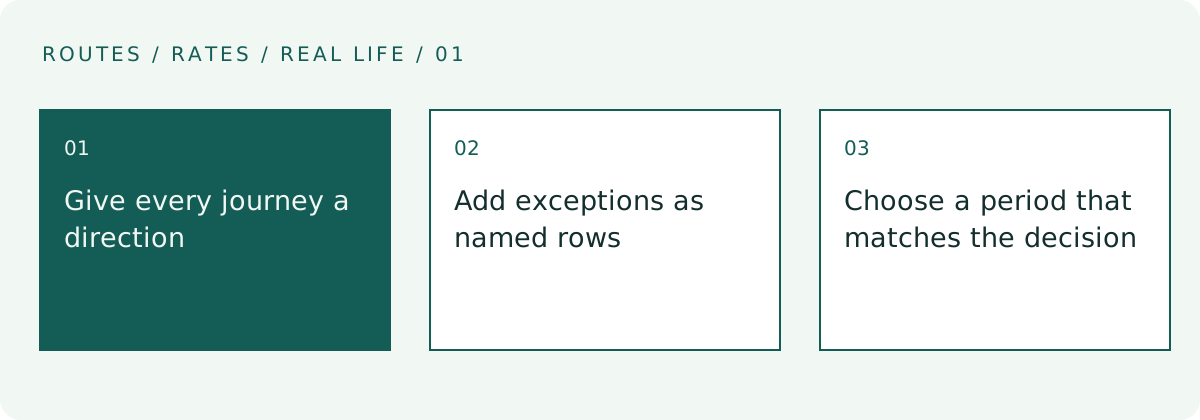
Give every journey a direction
Write the workdays for the period you are considering. Then identify the outward and return journey for each day. An overnight shift may begin on one calendar date and end on another, but it still has two travel directions. A one-way fare is not a round-trip cost.
Imagine four shifts in one week and three in the next. At an invented $2.50 fare in each direction, fourteen one-way journeys cost $35 before any transfer rules or other charges. Using five days per week would produce $50 and describe a different schedule. Neither calculation tells you what a local transit agency actually charges.
Add exceptions as named rows
Training at another site, a planned day off and a ride from a friend can change the count. Add only confirmed arrangements to the main plan. Put uncertain shifts or rides in a separate scenario instead of treating them as guaranteed. The calendar is a model of current expectations, not a statement that work cannot change.
Check whether the fare applies to the full route. Transfers, express services or different zones may have separate rules. Use the local operator’s current published information and label the date checked. Do not assume a card accepted by one service will be accepted by every service used on the journey.
Choose a period that matches the decision
A weekly ticket should be compared with the journeys in its actual valid week. A calendar-month pass should be compared with that calendar month, not four identical weeks. If the decision concerns one upcoming pay period, show that exact period and keep a monthly average separate.
A useful finished note has four parts: expected workdays, journeys per day, applicable fare assumptions and exceptions. Revisit it when the schedule changes. A precise journey count cannot eliminate delays or fare changes, but it prevents a simple multiplication from hiding the wrong calendar.
Continue the comparison
Find the break-even point before buying a pass
A parking price needs an entry time and an exit time
Method and scope
This is an original worked planning guide. All amounts, schedules and providers in its examples are fictional unless a source is explicitly identified. The calculations explain relationships, not a personalized financial recommendation. No private account or provider payment flow was tested.