A carpool contribution can be stated per journey, per day or per week. Those units produce different expectations when schedules change. Before someone agrees to cover a share, make the arrangement clear. This article is about voluntary planning, not insurance coverage, employment obligations or a transportation service contract.
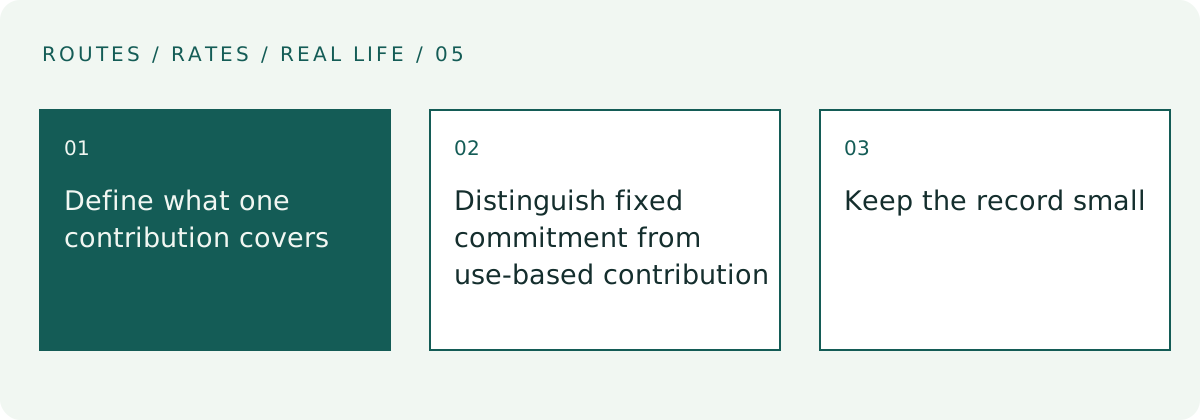
Define what one contribution covers
Name the route, direction and period. Does the amount cover a round trip or only the ride to work? Is parking included? Who is participating? Do not assume that an agreed weekly amount automatically includes an extra stop or a different worksite.
In an invented arrangement, two passengers each offer $4 per completed round-trip workday. Three shared days would produce $12 from each passenger. A fourth day on which only one direction is shared needs the rule the group agreed to; arithmetic cannot invent that rule after the ride.
Distinguish fixed commitment from use-based contribution
A fixed weekly contribution may support predictable planning, while a per-ride arrangement follows actual use. Neither is inherently fair for everyone. Discuss how cancellations, schedule changes and days off are handled before relying on the arrangement.
Avoid dividing the driver’s entire vehicle budget without agreement. Fuel, parking, ownership costs and the time involved are different categories. A voluntary amount does not have to reproduce every cost, but everyone should understand what it represents. Check applicable insurance and local requirements with appropriate sources if the arrangement raises those questions.
Keep the record small
A simple count of agreed journeys can be enough. The group does not need private payroll records, card statements or account access. If someone cannot participate on a particular day, record the changed plan rather than interpreting silence as a promise.
At a review point, ask whether the route and contribution still fit. A shift change may make the old arrangement impractical even when nobody did anything wrong. Preserve room to decline or renegotiate future rides. The goal is a workable shared plan with clear boundaries, not a formula that claims to settle every question of fairness.
Continue the comparison
A combined errand needs one total and a clear comparison
Reprice the commute when the shift pattern changes
Method and scope
This is an original worked planning guide. All amounts, schedules and providers in its examples are fictional unless a source is explicitly identified. The calculations explain relationships, not a personalized financial recommendation. No private account or provider payment flow was tested.